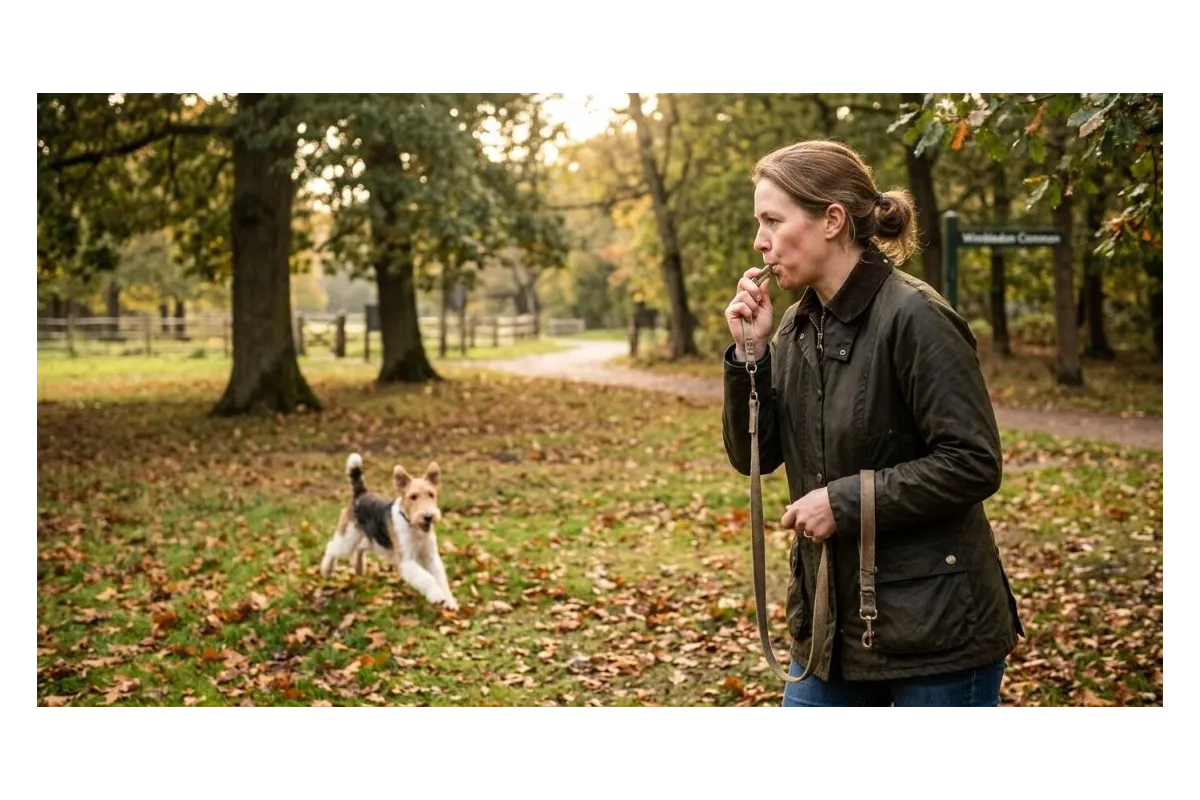
The ultimate guide to whistle recall
The Ultimate Guide to Whistle Recall: How to Get Your Dog to Return Reliably
Having a dog that comes back when called is one of the most important skills you can teach. A reliable recall gives your dog more freedom to explore while giving you confidence that you can get their attention when it matters.
One of the most effective ways to develop a consistent recall is to use a dog training whistle. Unlike a spoken command, a whistle produces a consistent sound that can carry over considerable distances, making it particularly useful when walking in parks, fields, woodland or open countryside.
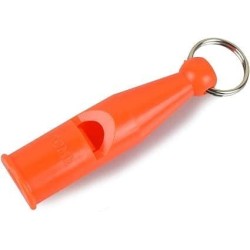
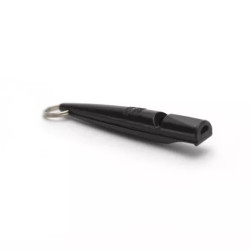
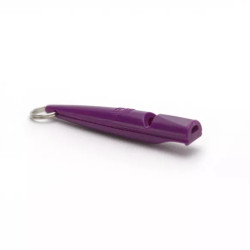
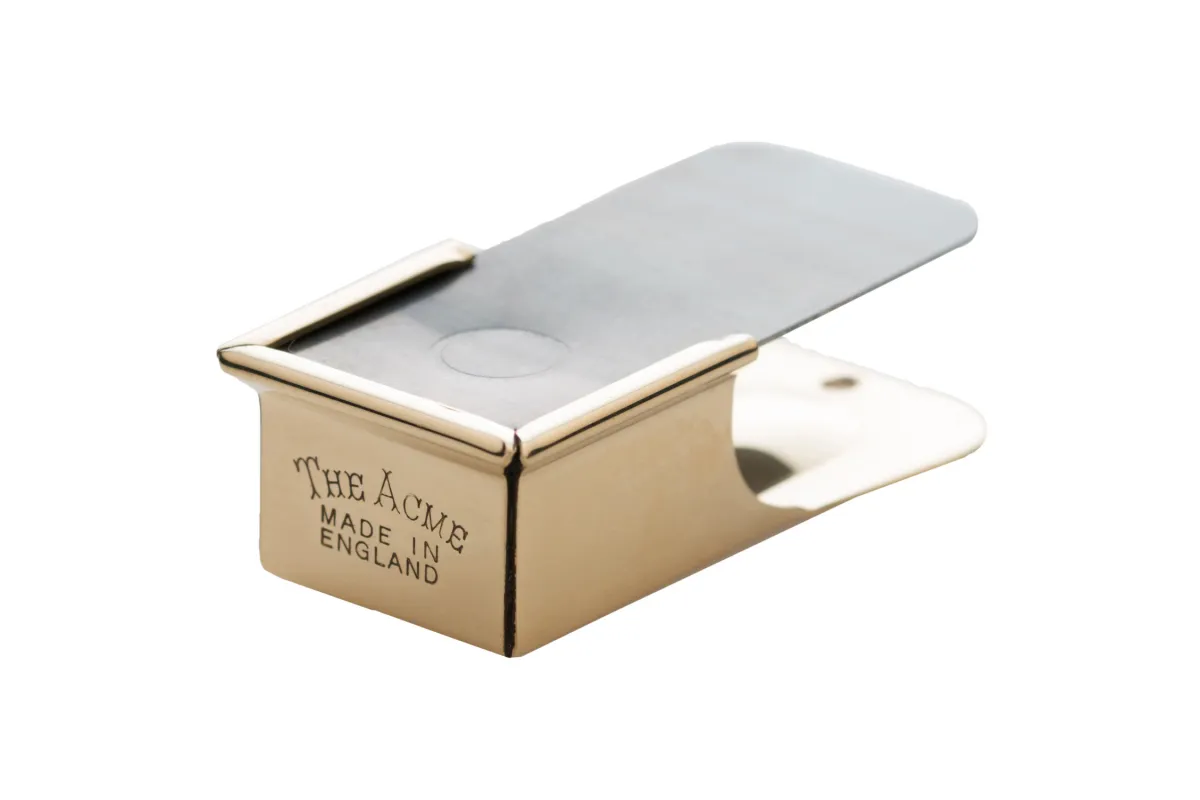
The ACME range of dog whistles includes several models specifically designed for training and recall, including the ACME 210½, 211½ and Pro Trialler 212. ACME's dog-training whistles are designed to provide consistent sound, and the company recommends different models according to the dog's size, working distance and environment.
Why Use a Whistle for Recall?
Your voice can change depending on your mood, distance, wind direction and background noise. A whistle, on the other hand, gives your dog the same basic signal every time.
This consistency is extremely valuable during training. Once your dog learns that a particular whistle signal means "come back to me", you have a cue that can be used whether your dog is ten metres away or much further across a field.
ACME's dog whistles are specifically designed for communication with dogs over distance. The company describes its range as offering different pitches and tones to suit different dogs and training environments.
The key is remembering that the whistle itself doesn't teach recall. The training gives the whistle its meaning.
Choosing the Right ACME Whistle
Choosing the right whistle depends on your dog and how you intend to use it.
The ACME 210½ is commonly associated with closer-range work and is particularly popular with owners of smaller dogs and spaniels. The ACME 211½ is designed for greater distances and is commonly used with retrievers, Labradors and working dogs. ACME also offers the Pro Trialler 212, designed to provide a consistent tone and perform in demanding training environments.
When choosing a whistle, consider how far your dog normally works from you, the terrain you walk in and whether you need the whistle primarily for close-range pet training or longer-distance fieldwork.
You can explore the current ACME dog whistle range to compare the available models.
Step 1: Introduce the Whistle
Don't start by taking your dog to a huge open field and expecting them to return from hundreds of metres away.
Begin somewhere quiet and familiar.
Choose a simple whistle pattern for recall and use it consistently. For example, you might use two short pips. The exact pattern is less important than making sure you use the same signal every time.
You first need to teach your dog that the whistle predicts something wonderful.
Blow the recall signal and immediately give your dog a high-value reward. This could be a favourite treat, enthusiastic praise or a short game.
Repeat this several times over multiple sessions.
ACME's own training guidance recommends creating a positive association with the whistle by pairing the sound with food and then gradually teaching the puppy or dog to come towards the sound.
Step 2: Start at Close Range
Once your dog recognises the whistle, begin practising the actual recall.
Start only a few metres away. When your dog is paying attention but isn't distracted, give your recall whistle.
As soon as they turn towards you, encourage them to come.
When they reach you, reward them generously.
At this stage, speed isn't the most important thing. You are building an association:
Whistle → turn around → come to owner → something good happens.
Repeat this until your dog begins turning towards you almost automatically when they hear the signal.
Step 3: Gradually Increase the Distance
Once your dog is responding reliably at close range, gradually increase the distance.
Move from a few metres to ten metres, then further as your dog succeeds.
Don't increase the distance too quickly. If your dog starts ignoring the whistle, you've probably made the exercise too difficult.
ACME's guidance on long-range recall recommends building from a reliable short-range response and increasing distance in measured steps rather than expecting the dog to suddenly cope with a much greater distance.
Think of recall training as building a staircase. Each successful step makes the next one easier.
Step 4: Introduce Distractions
Distance isn't the only challenge.
A dog that recalls perfectly in your garden may suddenly appear to have forgotten everything when they see another dog, smell a rabbit or discover an interesting scent.
Distractions need to be introduced gradually.
Start with mild distractions and reward your dog for returning. As their reliability improves, introduce more challenging environments.
You might progress from:
Garden
Quiet field
Local park
Busier park
Woodland
Open countryside
Areas with greater wildlife distractions
Always work within your dog's current ability.
Step 5: Make Coming Back Worthwhile
One of the biggest mistakes owners make is allowing the recall whistle to become associated with the end of fun.
Imagine your dog is enjoying a fantastic run. You blow the whistle, they return and immediately you put the lead on and walk home.
After enough repetitions, your dog may learn that coming back means the fun stops.
Instead, regularly reward your dog and then release them to continue exploring.
Blow the whistle, reward the recall and then say a release cue such as "go play".
This teaches your dog that returning to you doesn't necessarily mean their freedom is over.
Step 6: Never Use the Whistle for Punishment
Your recall whistle should have a positive meaning.
If your dog eventually returns after ignoring you for several minutes, don't punish them when they arrive.
Even if you're frustrated, reward the return.
Your dog needs to learn that coming back to you is always the safest and most rewarding choice.
Punishing a dog for returning can make them reluctant to respond in the future.
Training in Different Conditions
A reliable recall needs to work outside the perfect training environment.
Practise in different weather conditions, locations and distances. Wind, vegetation, hills and buildings can all influence how sound travels.
ACME recommends considering factors such as distance, background noise, terrain and the dog's individual response when selecting a whistle.
If your dog struggles, don't simply blow harder or repeatedly sound the whistle. Reduce the difficulty and rebuild the behaviour.
Don't Overuse the Recall
The whistle should mean something important.
Avoid blowing the recall signal repeatedly while your dog is ignoring you. If the dog learns that they can hear the whistle several times before anything happens, the signal can lose its value.
Instead, set your dog up for success.
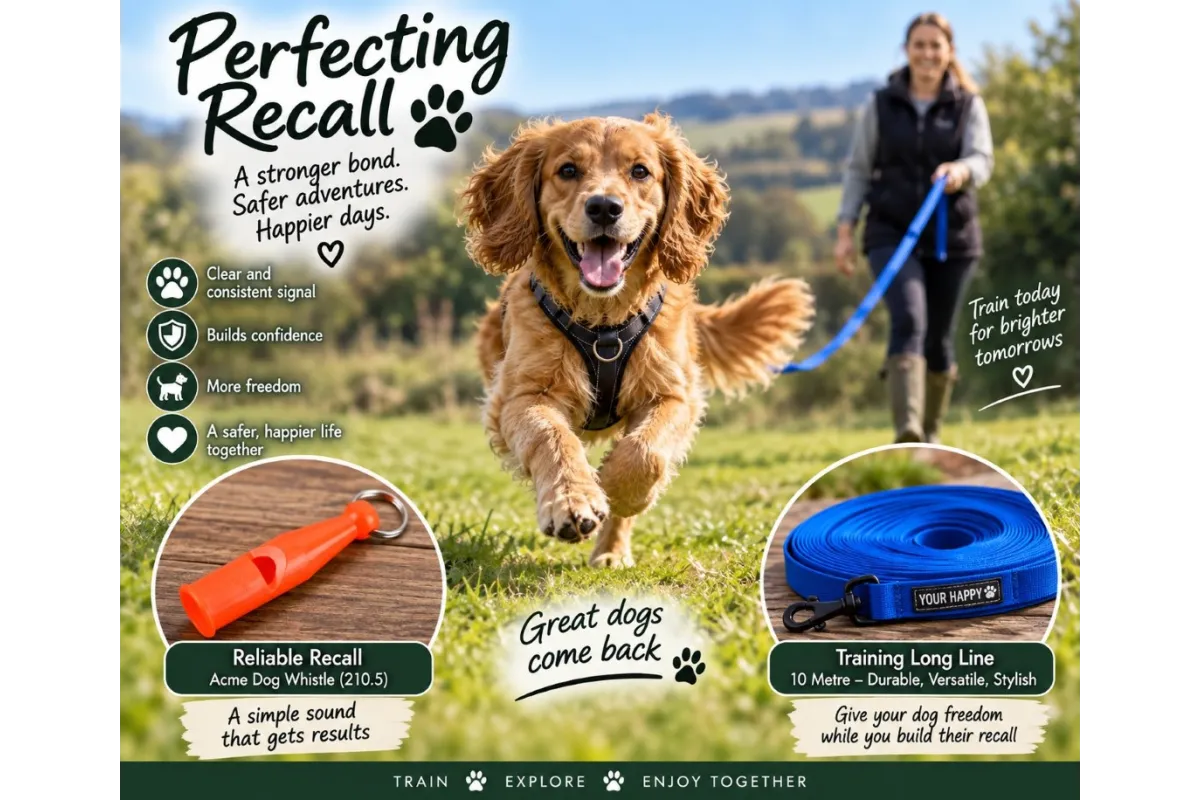
If you're training at a new location, use a long line initially if appropriate and safe. Practise at manageable distances and reward successful responses.
Can You Really Teach an Instant Recall?
The goal should be a fast, reliable recall, but no responsible trainer can guarantee that a dog will return instantly in every situation.
Dogs are living animals, and distractions, fear, excitement, wildlife and unfamiliar situations can affect their behaviour.
What you can build is a highly conditioned response where your dog hears their whistle cue and immediately understands that returning to you is the right choice.
That reliability comes from repetition, positive reinforcement and gradually increasing the difficulty.
The ACME Advantage
A good whistle is an excellent tool because it gives you a consistent recall signal that can be used at distances where your voice may be difficult to hear.
The ACME range offers several options, from the 210½ for closer work to the 211½ for longer-distance training, along with the Pro Trialler 212. ACME states that its dog-training whistles are individually tested and designed to maintain consistent sound quality.
But remember: the whistle is only the tool. Your training creates the recall.
Start close, make coming back rewarding, increase distance gradually, introduce distractions carefully and always give your dog a reason to want to return.
With patience and consistent training, an ACME whistle can become one of the most valuable pieces of equipment in your dog's training kit—helping you communicate clearly whether your dog is playing in the park, exploring the countryside or working at a considerable distance.