Basic dog training
Training your dog is one of the most rewarding investments you can make in your relationship with your canine companion. Basic dog training builds a foundational layer of trust, ensures your pet's safety, and helps them integrate smoothly into human households. By mastering a few core concepts and physical commands, you can transform your everyday routines into excellent opportunities for lifelong bonding and mutual respect.
## The Foundation: Positive Reinforcement
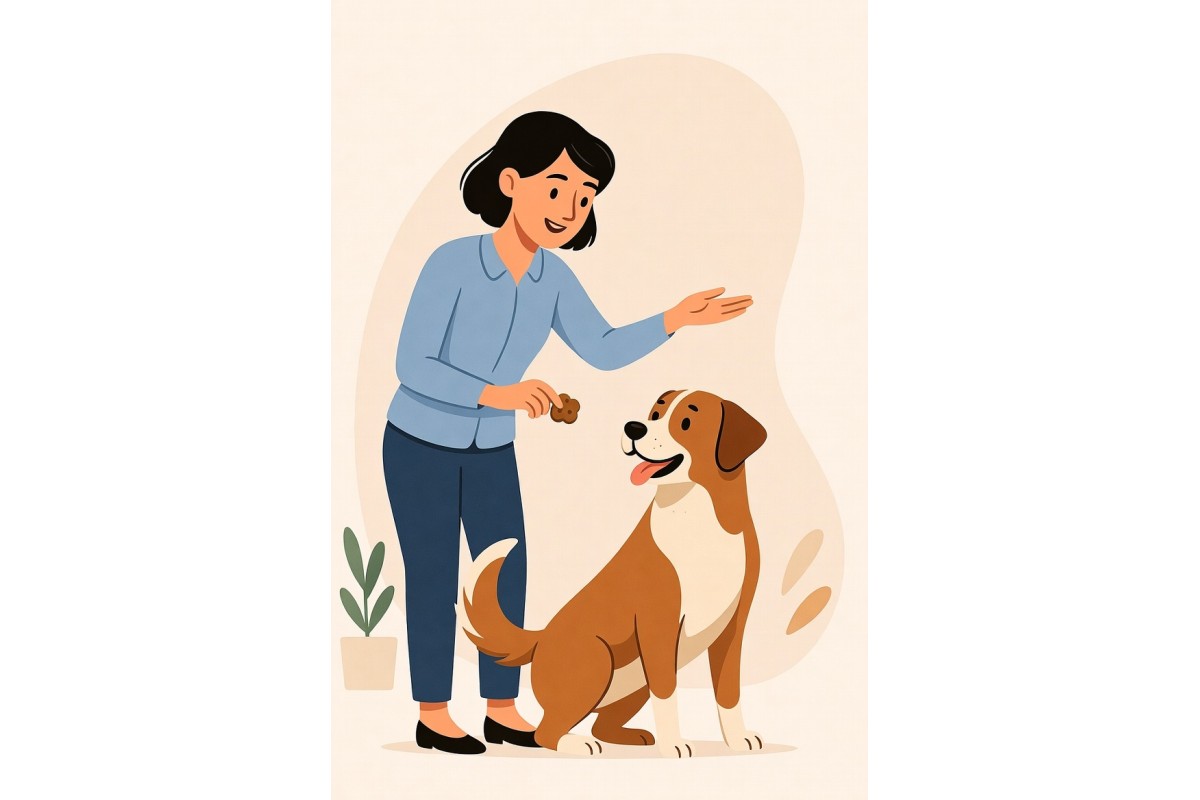
Modern dog training centers entirely on the philosophy of positive reinforcement. This methodology rewards desired behaviours with incentives—such as freeze-dried liver, small pieces of chicken, or a favourite squeaky toy—while completely ignoring or redirecting unwanted behaviours. Dogs learn primarily by association; when a specific action consistently results in a pleasant reward, they become highly motivated to repeat that action.
To make positive reinforcement truly effective, your timing must be absolutely impeccable. You must deliver the reward within one to two seconds of the correct behaviour. Many trainers use a clear, specific marker word like "Yes!" or a mechanical clicker at the exact instant the dog performs the task. This precise acoustic feedback tells your dog exactly which movement earned them the treat, speeding up the learning process significantly.
## Essential Core Commands
Every companion dog should master five fundamental commands to navigate daily life safely and politely:
1. Sit: This is the natural starting point for all training. Hold a high-value treat close to your dog’s nose, then slowly move your hand upward and backward over their head. As their head tilts up to follow the food, their bottom will naturally lower to the ground. Mark the exact moment their rear hits the floor and immediately reward them.
2. Down: This command promotes relaxation and calm. From a sitting position, lower a treat straight down from your dog's nose to the floor between their front paws. Drag the treat slowly along the ground away from them in an "L" shape. Once their chest fully touches the floor, mark the behaviour and deliver the treat.
3. Stay: A crucial safety command that teaches valuable self-control. Ask your dog to sit or lie down. Open your flat palm toward them and say "Stay." Take just one step back, wait two seconds, step back in, and reward them for remaining completely still. Gradually introduce distance and duration over multiple sessions.
4. Come (Recall): This reliable command can actively save your dog's life in an emergency. Start in a very low-distraction environment. Crouch down low, open your arms wide, and call their name followed by "Come!" in an enthusiastic, high-pitched voice. When they reach you, celebrate with abundant praise and treats. Never use this command for something unpleasant, like bath time.
5. Leave It: This teaches your dog to ignore dangerous or unwanted items on the ground. Place a treat inside a closed fist and present it. They will likely sniff and paw at your hand. Completely ignore these frantic attempts. The exact second they pull their nose away and look at you, mark the behaviour and reward them with a separate treat from your opposite hand.
## Structuring Your Practice
Consistency and patience are the fundamental cornerstones of successful dog training. Keep your training sessions incredibly brief—ideally between five and ten minutes, two to three times a day. Dogs, especially young puppies, have short attention spans and can quickly become frustrated or bored if pushed too hard. Always end your training sessions on a positive note with a highly successful command, followed by a brief game of fetch or a relaxing belly rub.
Additionally, always start training in a quiet, familiar environment like your living room. Once your dog reliably obeys a command indoors, gradually introduce minor distractions. Move to the back garden, then to a quiet street corner, and eventually to a bustling local park. Training is not a brief phase, but a beautiful lifelong journey that deepens the unique bond between you and your dog. With patience, clarity, and plenty of rewards, you will raise a confident, well-behaved companion ready for any adventure.

You may also like