Keeping Dogs Safe and Secure On Bonfire Night
Keeping Dogs Safe and Secure On Bonfire Night
Fireworks may be an exciting part of celebrations such as Bonfire Night and New Year's Eve, but for many dogs, they can be frightening and stressful. Sudden bangs, whistles, flashes and vibrations can be difficult for dogs to understand, particularly because they appear without warning and can continue for hours.
Some dogs barely react to fireworks, while others may shake, pant, pace, bark, hide or desperately try to escape. Preparing in advance can make a huge difference. Here are some practical ways to help keep your dog safe, secure and as comfortable as possible during fireworks.
Exercise Your Dog Before It Gets Dark
If fireworks are expected in the evening, try to take your dog for their main walk earlier in the day.
This gives them an opportunity to exercise, sniff, explore and go to the toilet before the noise begins. Avoid waiting until after dark, as an unexpected firework could frighten your dog while you are outside.
Even dogs with excellent recall should be kept securely on a lead if fireworks are likely. A sudden explosion can cause a normally reliable dog to panic and run.
Make sure your dog's collar or harness fits securely before leaving home.
Make Sure Identification Details Are Up to Date
Firework season is a particularly important time to check your dog's identification.
Ensure your dog's microchip registration contains your current contact information and that any identification tag they wear is accurate.
Doors, gates and fences should also be checked before fireworks begin. A frightened dog can behave very differently from normal and may attempt to squeeze through surprisingly small gaps.
Prevention is much easier than trying to find a frightened dog that has escaped.
Create a Safe Space
Dogs often cope better with frightening noises when they have somewhere familiar to retreat.
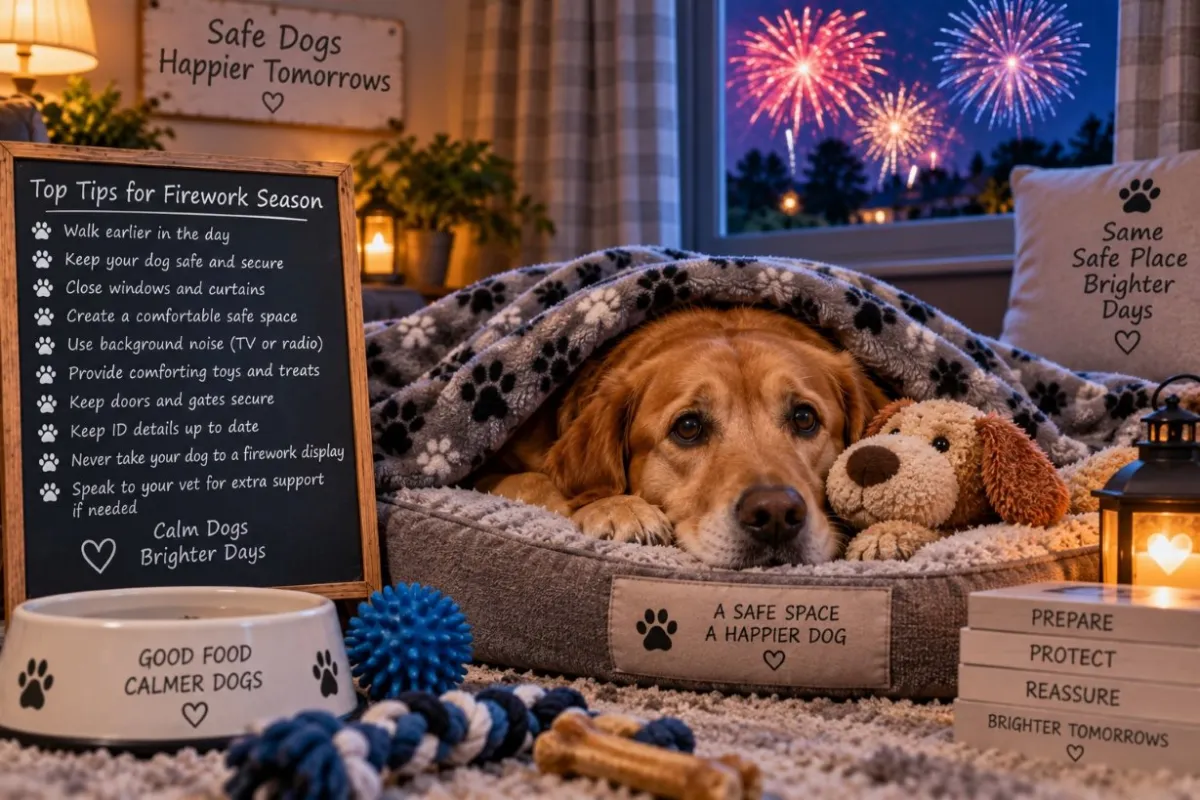
Create a comfortable area in a quiet part of your home. Depending on your dog's preferences, this could be their usual bed, a covered crate that they already enjoy using or a cosy corner away from windows.
Include familiar bedding and perhaps a favourite plush or comfort toy.
Allow your dog to decide whether they want to use the space. Never force a frightened dog into a crate or enclosed area if they aren't already comfortable there.
Ideally, establish the safe area several days or weeks before firework season so your dog already associates it with relaxation.
Close Windows and Curtains
Before fireworks start, close windows and draw curtains or blinds.
This can help reduce both the noise and sudden flashes of light entering your home.
Playing the television, radio or gentle music at a normal volume may also help disguise some outside noise. The idea isn't to drown out fireworks with something equally loud, but to create a more consistent background sound.
Keep your dog's environment familiar and comfortable.
Stay Calm and Let Your Dog Choose
Dogs can respond to the behaviour of the people around them, so try to behave normally.
If your dog wants to stay close to you, it is perfectly reasonable to offer reassurance and affection. Comforting a frightened dog does not mean you are deliberately teaching them to be afraid.
Equally, don't force interaction.
Some dogs want to sit beside their owners, while others prefer to hide underneath furniture or retreat to another room. Provided the location is safe, allow your dog to choose where they feel most comfortable.
Provide Positive Distractions
Food and toys can provide useful distractions for dogs that are relaxed enough to engage with them.
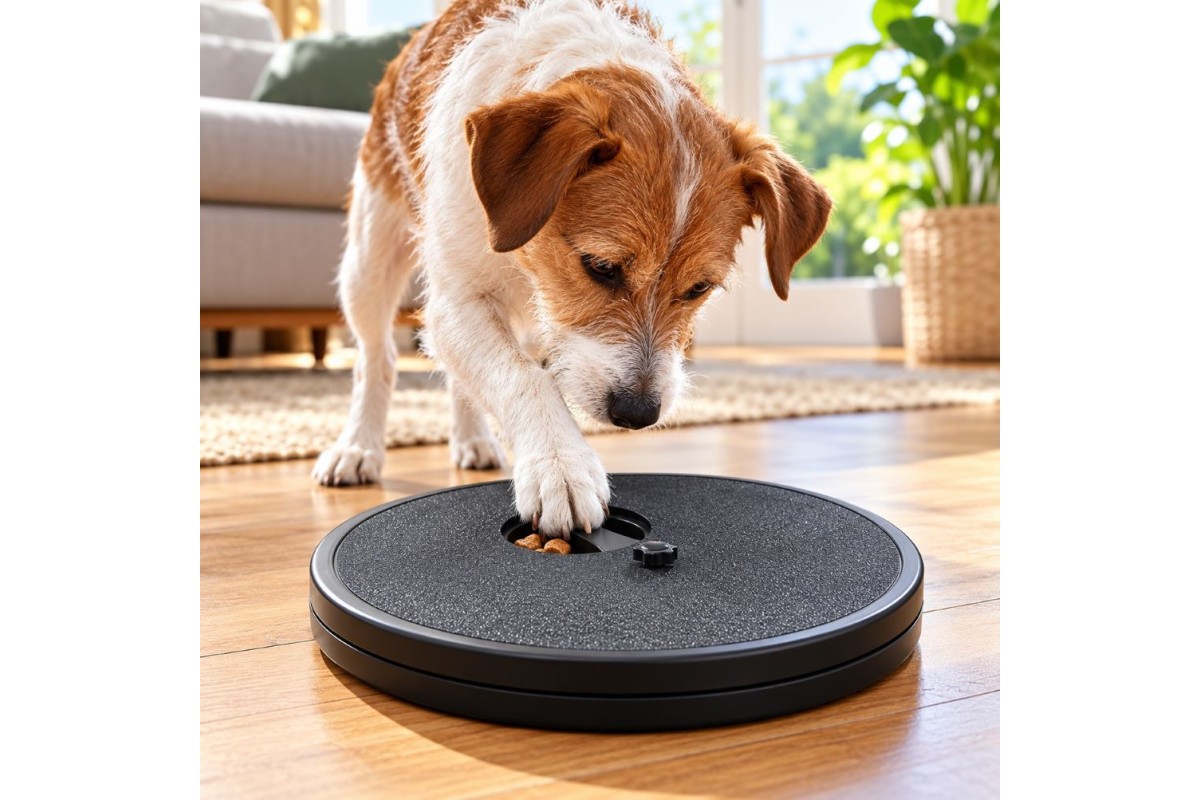
A food puzzle, lick mat, appropriate chew or favourite toy can give your dog something positive to concentrate on.
You can also use small treats to reward calm behaviour.
However, a severely frightened dog may refuse food completely. Don't force them to eat or play. Instead, concentrate on making their surroundings as safe and comfortable as possible.
Keep Doors Secure
Be particularly careful when opening external doors during fireworks.
If you need to answer the door, consider keeping your dog behind a secure internal door or stair gate. A frightened dog may bolt through an open doorway before you have time to react.
If your dog needs to go into the garden for a toilet break, accompany them and keep them on a lead if necessary. Check that gates are securely closed.
Never leave a frightened dog outside alone during a firework display.
Never Take Your Dog to a Firework Display
Taking a dog to a firework display is unnecessary and can expose them to extremely loud noise, crowds and unpredictable flashes at close range.
Even if your dog hasn't previously shown fear of fireworks, one frightening experience could potentially change how they react in the future.
Leaving them safely at home in a familiar environment is usually a much better option.
Plan Ahead for Dogs With Severe Firework Fear
If you already know that your dog becomes extremely distressed by fireworks, don't wait until Bonfire Night to look for solutions.
Speak to your vet well in advance. They can discuss your dog's behaviour and whether additional support may be appropriate.
A qualified behaviour professional can also help develop a gradual sound desensitisation and counter-conditioning programme. This usually involves exposing the dog to recorded firework sounds at a very low level while creating positive associations, gradually increasing the volume only when the dog remains comfortable.
This type of training needs to be done slowly and shouldn't be started by playing loud firework recordings to an already frightened dog.
Preparation Is the Best Protection
Fireworks are difficult to completely avoid, but good preparation can make the experience safer and less stressful.
Walk your dog before dark, secure your home and garden, check identification details, close curtains and provide a comfortable safe space before the first fireworks begin.
Most importantly, pay attention to what your individual dog needs. Some will happily sleep through the evening with the television playing, while others will want to remain close to you.
By planning ahead and creating a secure, familiar environment, you can help your dog get through firework season feeling protected, comfortable and safe.