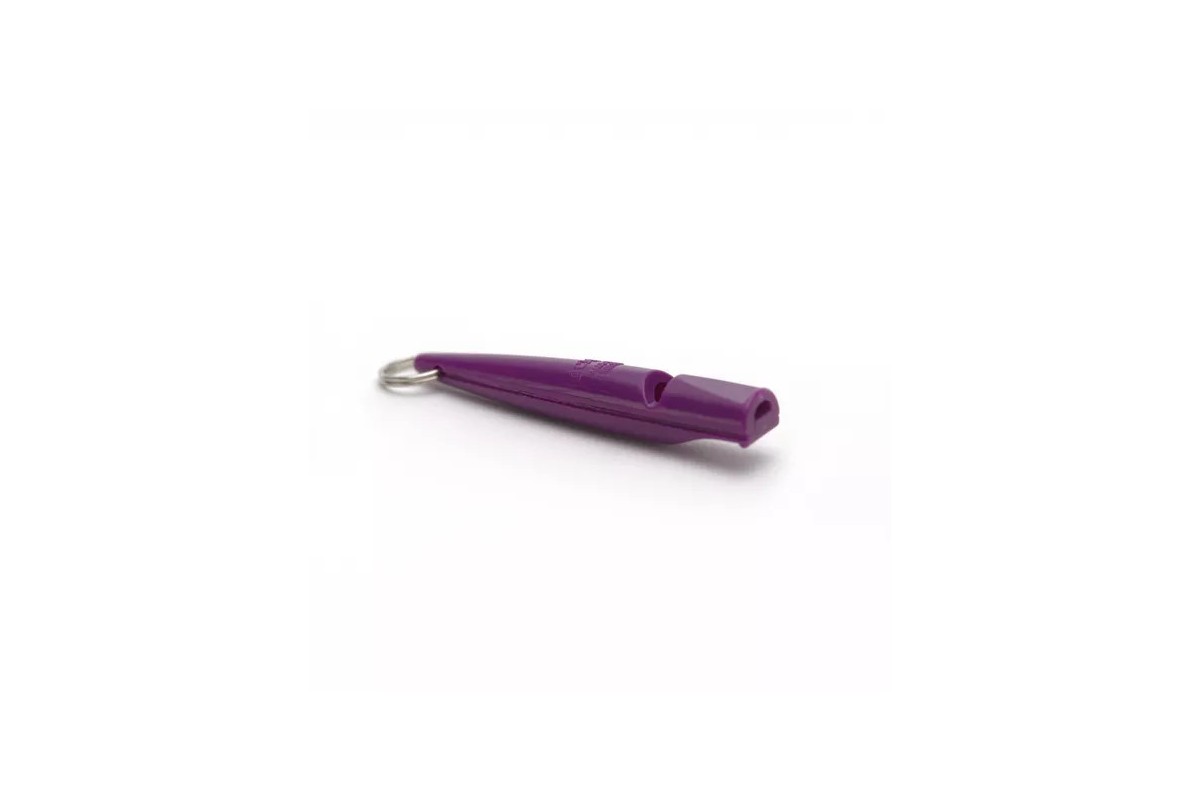
Acme Whistles, which one should I choose?
Choosing the right dog whistle is crucial for effective training, and ACME, a British manufacturer with over 150 years of experience, has long been the industry standard. While they all look somewhat similar at a glance, ACME’s numbered system denotes significant variations in frequency, pitch, and volume.
If you are navigating the choice between their most popular models—the 212, the 210.5, the 211.5, and the 576—the decision usually comes down to the breed of your dog, the environment you work in, and the training distance you require.
Here is a breakdown of the differences to help you make an informed choice.
The Importance of Frequency (The Numbers)
Before understanding the specific models, it is vital to understand the ACME numbering system. The lower the number, the lower the pitch and the longer the sound wave. Longer sound waves travel further, making low-pitch whistles ideal for long-distance work. Higher-pitch whistles have shorter sound waves, which don't travel as far but are often perceived as sharper and more urgent by the dog over short distances.
1. ACME 210.5: The Close-Contact Specialist
The ACME 210.5 is often referred to as the "Spaniel Whistle," though it is excellent for any breed worked in close proximity to the handler.
-
Pitch: High pitch.
-
Frequency: Approximately 5400 Hz.
-
Characteristics: This whistle produces a single, clear, high-frequency note. Because it is higher pitched, its sound does not carry as far as the 211.5 or 212. It is designed for close-working dogs that need to respond to subtle commands within a 100-to-200-yard range.
-
Best For: Spaniels, Hounds, and companion dogs where the owner wants a reliable recall without disturbing wildlife or neighbors with a booming sound.
2. ACME 211.5: The Versatile All-Rounder
If there is a "universal" retriever whistle, the 211.5 is it. It is the gold standard in the field trial community, particularly among Labrador Retriever handlers.
-
Pitch: Medium-High pitch.
-
Frequency: Approximately 4850 Hz.
-
Characteristics: The 211.5 sits perfectly in the middle of the frequency range. It offers a fantastic balance: it has enough depth to carry across large fields—even in windy weather—but is sharp enough to command attention instantly. It is renowned for producing a perfectly consistent frequency, meaning every 211.5 whistle sounds exactly the same.
-
Best For: Retrievers, Pointers, and general gundog work. If you do a mix of close-quarter training and long-distance retrieves, this is the safest choice.
3. ACME 212: The Long-Distance Powerhouse
The ACME 212 is the big brother of the 211.5. When you need maximum distance and penetration, this is the tool required.
-
Pitch: Lower-Medium pitch.
-
Frequency: Approximately 4250 Hz.
-
Characteristics: The 212 produces a deeper, much louder tone. Because the frequency is lower, the sound waves are longer and physically travel further through heavy cover, woodland, and over distances. This whistle requires less effort from the handler to produce a loud, penetrating sound that the dog will hear clearly, even at 500+ yards.
-
Best For: Trial dogs, large-running hounds, and working dogs operating at extreme distances or in very dense, sound-dampening terrain.
4. ACME 576: The Silent (Adjustable) Option
The ACME 576, often called the "Silent" whistle, breaks from the mold of the fixed-frequency models above.
-
Pitch: Adjustable (Silent to Hearing Range).
-
Characteristics: This whistle utilizes a screw mechanism at the end to adjust the air column, changing the pitch from a very low frequency (audible to humans) to an ultra-high frequency (the "silent" range that only dogs can hear). It is precision-engineered from brass.
-
Pros: It allows you to tune the whistle precisely to your specific dog’s hearing sensitivity. It is excellent for suburban environments where you do not want neighbors complaining about a noisy whistle.
-
Cons: Because it is tunable, it lacks the consistency of the fixed-frequency models. If you lose it, your replacement might not sound exactly the same. It also does not carry as well over long distances as the 211.5 or 212.
-
Best For: Trainers living in urban areas, or for owners with dogs that are highly sensitive to loud, sharp noises.
Summary: Which One Should You Choose?
-
Choose the 210.5 if you have a Spaniel or close-working dog and train mostly within 100 yards.
-
Choose the 211.5 if you want the best all-around whistle for retrievers and variable distances.
-
Choose the 212 if you work your dog at extreme ranges or in very thick cover and need maximum sound projection.
-
Choose the 576 if you need adjustability to suit a specific dog or wish to train without disturbing the peace.

Related products


You may also like