













How to Use a Target Stick to Train Your Dog: A Step-by-Step Guide
How to Use a Target Stick to Train Your Dog: A Step-by-Step Guide
Training your dog doesn't have to be complicated. In fact, some of the most effective training methods use simple equipment, patience and plenty of positive reinforcement.
One particularly useful training accessory is a dog training target stick, sometimes called an indicator stick or target pointer.
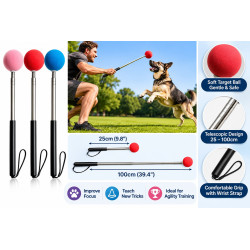
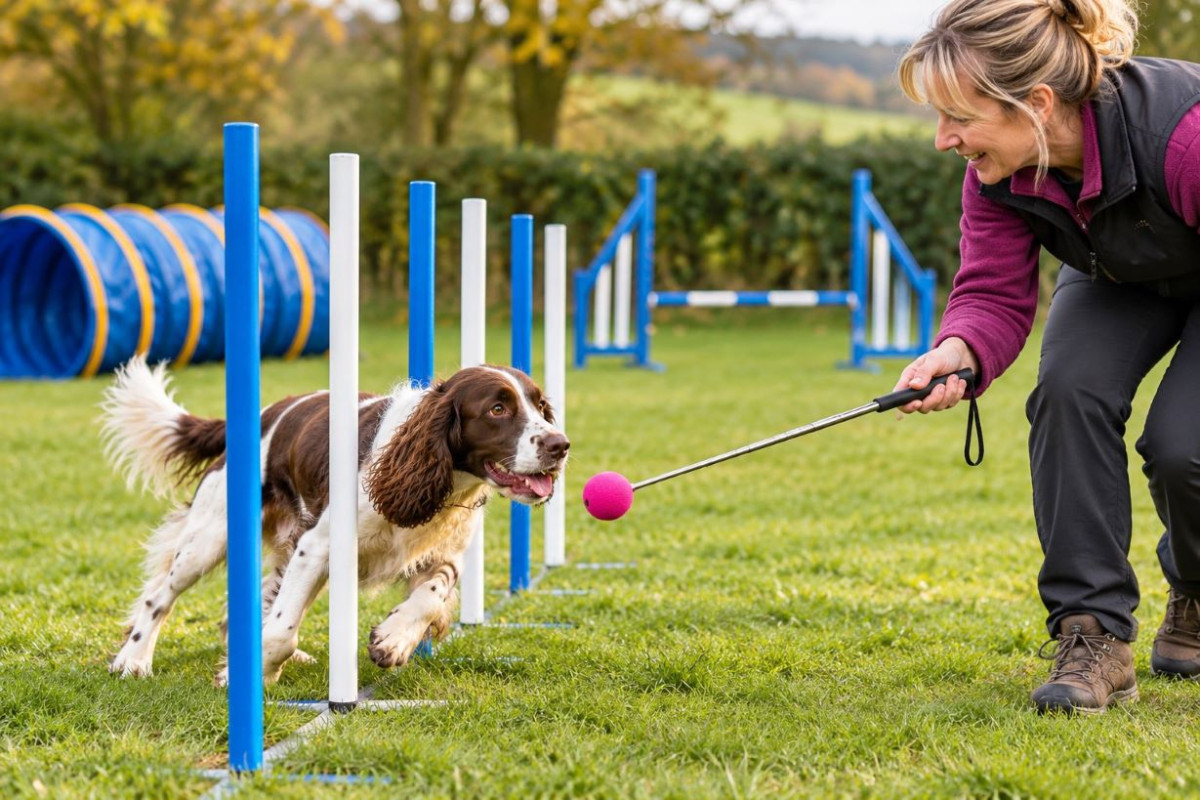
At Your Happy Dog, our telescopic training target stick features a bright pink foam ball, an extendable metal shaft and a comfortable black handle with a wrist strap.
It's a simple but versatile tool that can help you teach your dog new behaviours, improve their focus and enjoy fun, interactive training sessions.
Whether you're training an enthusiastic puppy or teaching an older dog some new tricks, here's how to get started.
What Is a Dog Training Target Stick?
A target stick is a training tool used to guide your dog towards a particular position or location.
The idea is simple: your dog learns to touch the ball at the end of the stick with their nose.
Once they've understood this behaviour, you can use the stick to guide them through different movements and exercises.
Unlike physically moving your dog into position, target training encourages them to make their own choices.
It's particularly effective when combined with clicker training and reward-based methods.
Step 1: Introduce the Target Stick
Begin in a quiet room where your dog feels comfortable and there are few distractions.
Hold the target stick a short distance from your dog's nose, keeping the pink ball at a comfortable height.
Most dogs will naturally investigate something new by sniffing it.
The moment your dog touches the ball with their nose, click your clicker or say a marker word such as "Yes!", then immediately give them a small treat.
Repeat this several times.
At this stage, you're teaching your dog that touching the pink ball earns a reward.
Training tip: Avoid pushing the ball towards your dog's nose. Allow them to approach it voluntarily.
Step 2: Introduce the Command "Touch"
Once your dog consistently touches the ball, you can introduce a verbal cue.
Hold out the stick and say "Touch" just before your dog moves towards the target.
When their nose makes contact with the ball, click and reward.
With repetition, your dog will begin to associate the word "Touch" with the action.
Gradually move the stick slightly to the left, right, higher or lower, encouraging your dog to follow the target.
Keep movements small initially and make sure your dog can reach the ball comfortably.
Step 3: Teach Your Dog to Follow the Target
Now comes the really interesting part!
Once your dog understands how to touch the target, you can begin using the stick to guide their movement.
Hold the ball a short distance in front of your dog and slowly move it a few centimetres away.
When your dog takes a step towards it and touches the ball, click and reward.
Gradually increase the distance as their confidence improves.
This exercise helps teach your dog to follow a target rather than simply touch something directly in front of them.
Because the stick is telescopic, you can adjust its length to suit the exercise without constantly bending down.
Step 4: Teach Your Dog to Spin
One of the easiest tricks to introduce using a target stick is a spin.
Start with your dog standing in front of you.
Hold the pink ball close to their nose and slowly guide it in a wide circle.
As your dog follows the target, their body should naturally begin to turn.
Initially, reward small movements in the correct direction.
Once they can complete a full circle, introduce the cue "Spin".
With practice, gradually reduce your reliance on the stick until your dog responds to a hand signal or verbal command.
Never force your dog to twist or turn, and avoid this exercise if it causes discomfort.
Step 5: Teach Your Dog to Move Into Position
Target training is also useful for teaching practical behaviours.
For example, you can use the stick to encourage your dog to move towards a particular spot, such as a training mat.
Hold the target just above the mat and reward your dog for approaching it.
Gradually reward them for stepping onto the mat and remaining there.
Eventually, you can introduce a separate cue such as "Place" or "Bed".
This can be useful when teaching your dog to settle calmly at home or when visiting friends.
The target stick acts as a temporary guide, helping your dog understand where you want them to go.
Step 6: Use the Stick for Agility Foundations
If your dog enjoys active training, a target stick can help introduce some basic agility movements.
You can use it to guide your dog around cones, between markers or towards particular positions.
For example, place two cones a short distance apart and use the target to encourage your dog to walk around one.
Click and reward when they complete the movement.
Gradually introduce more challenging routes as their understanding improves.
Always keep exercises appropriate for your dog's age, fitness and physical ability.
Step 7: Improve Focus and Engagement
Target training isn't just about teaching tricks.
It can also help your dog practise paying attention to you.
Short, enjoyable training sessions encourage your dog to engage with you and respond to cues.
You can use the target stick as a fun warm-up before practising other skills, including loose-lead walking or recall exercises.
However, remember that target training is not a substitute for teaching a reliable recall.
Recall should be practised separately using appropriate rewards, clear cues and safe training environments.
Common Target Training Mistakes to Avoid
When introducing a target stick, there are a few common mistakes worth avoiding:
-
Moving too quickly: Start with easy exercises before increasing difficulty.
-
Holding the target too far away: Your dog should initially be able to reach it without stretching.
-
Forgetting to reward: Mark the correct behaviour immediately and follow with a reward.
-
Making sessions too long: Several short sessions are often more effective than one lengthy session.
-
Using the stick to push your dog: Target training should always be voluntary.
-
Allowing your dog to chew the foam ball: The ball is a training target, not a chew toy.
If your dog becomes distracted or frustrated, return to an easier exercise and finish on a positive note.
How Long Should Training Sessions Last?
For most dogs, short sessions of around 3–5 minutes are a great starting point.
Puppies and easily distracted dogs may benefit from even shorter sessions.
Aim for several successful repetitions, then take a break.
The goal is to make training enjoyable rather than exhausting.
Make Dog Training Fun with Your Happy Dog
A telescopic target stick is a useful addition to any positive-reinforcement training kit.
From teaching a simple nose touch to guiding your dog through spins, positions and basic agility exercises, this versatile tool opens up plenty of opportunities for learning.
At Your Happy Dog, we believe training should strengthen the relationship between dogs and their owners while keeping sessions positive, rewarding and enjoyable.
Combine your Telescopic Dog Training Target Stick with a clicker and some tasty training treats, and you'll have everything you need to begin teaching your dog some exciting new skills.
Happy training!